Elaborative Interrogation
The AI Tutor asks "Why?" to integrate new facts with your existing knowledge schemata, creating robust mental hooks.
Rereading and highlighting feel good, but they don't lead to durable learning. Preceptor is built on over 100 years of cognitive psychology to fix that.
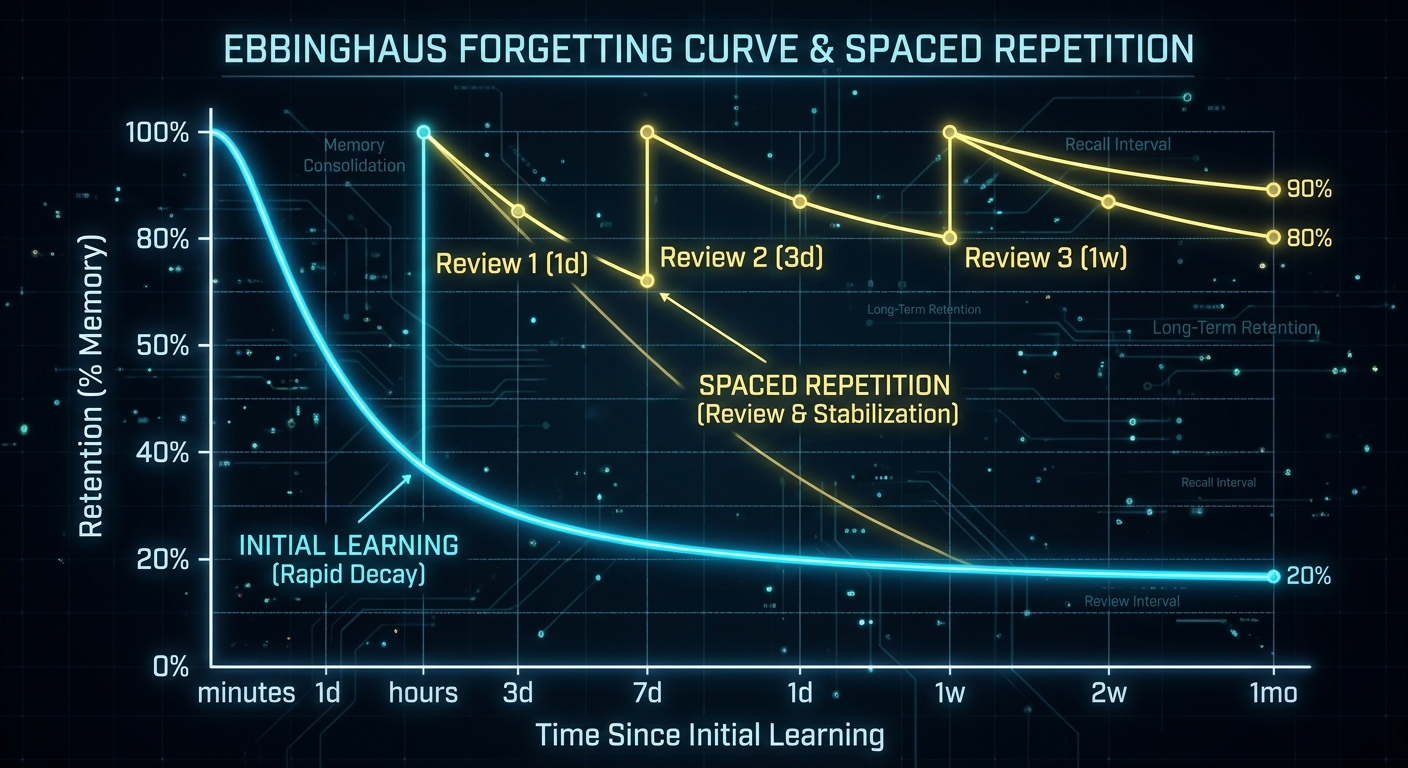
Memories decay exponentially. If you study everything today, you'll forget 80% by next week. The secret is "Spaced Repetition" (SRS).
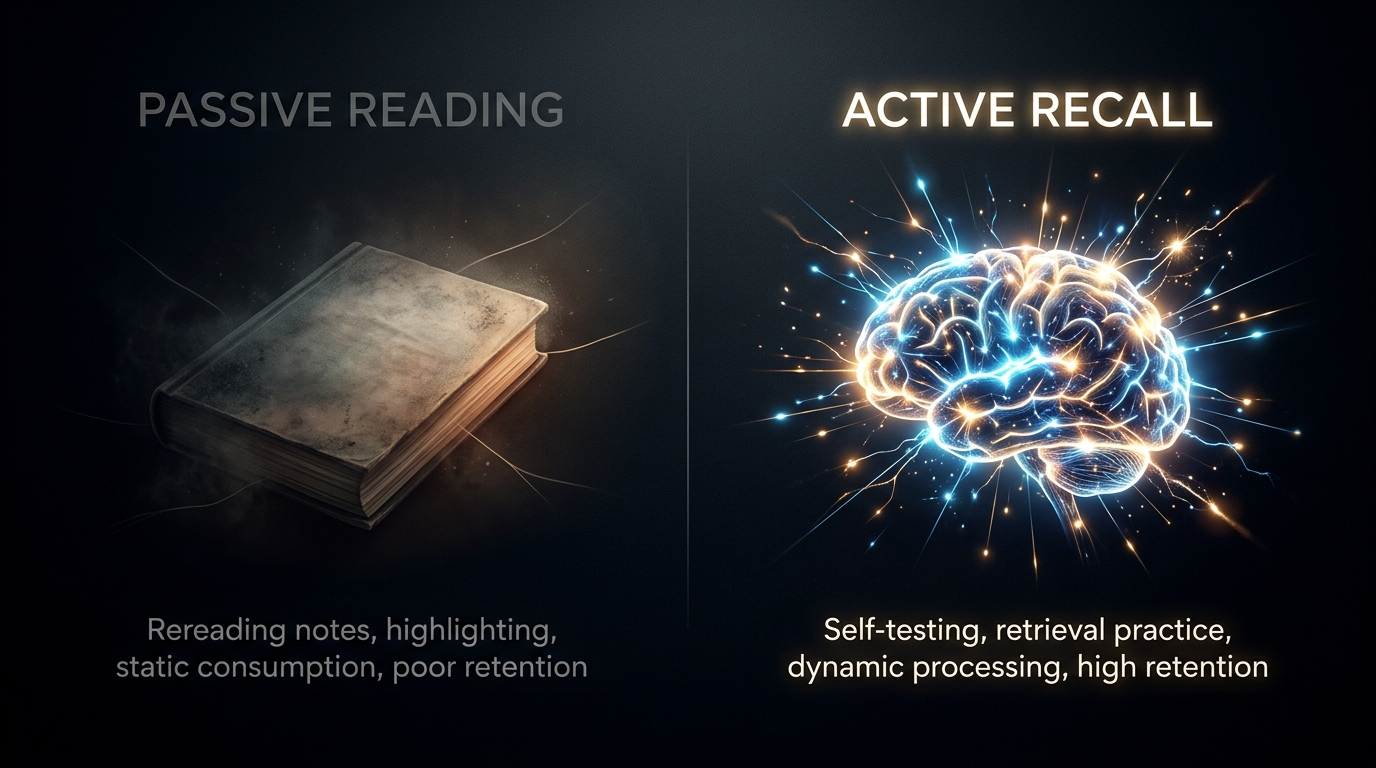
Learning is a constructive process, not a recording process. Passive encoding (reading) is weak. Active production (retrieving) is strong.
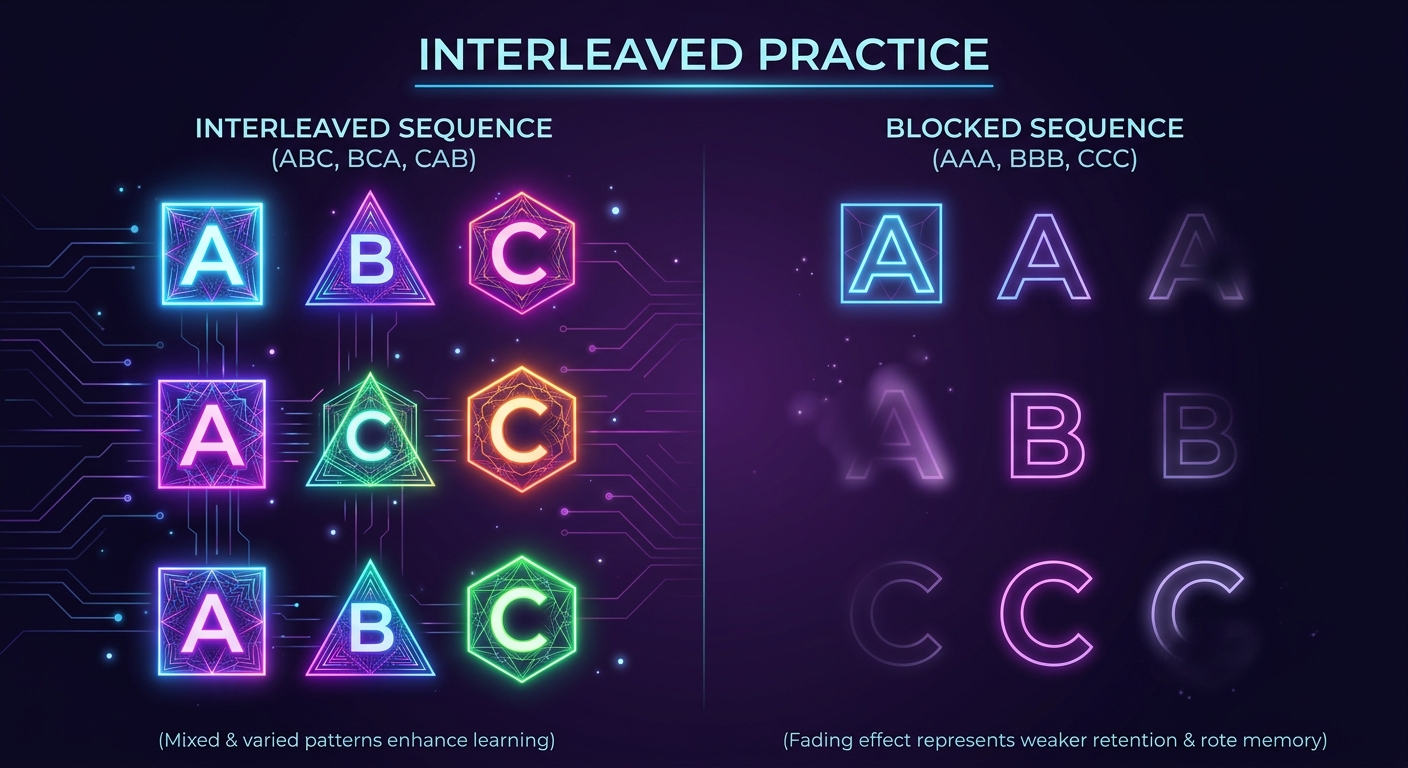
Most students master Topic A, then Topic B. Preceptor shuffles them (A-B-C-B-A-C). This forces "Discriminative Contrast".
The AI Tutor asks "Why?" to integrate new facts with your existing knowledge schemata, creating robust mental hooks.
Explaining your steps during problem-solving improves transfer to novel problems significantly better than rote practice.
Research shows that correcting a high-confidence error leads to the strongest retention. We prioritize these "Aha!" moments.